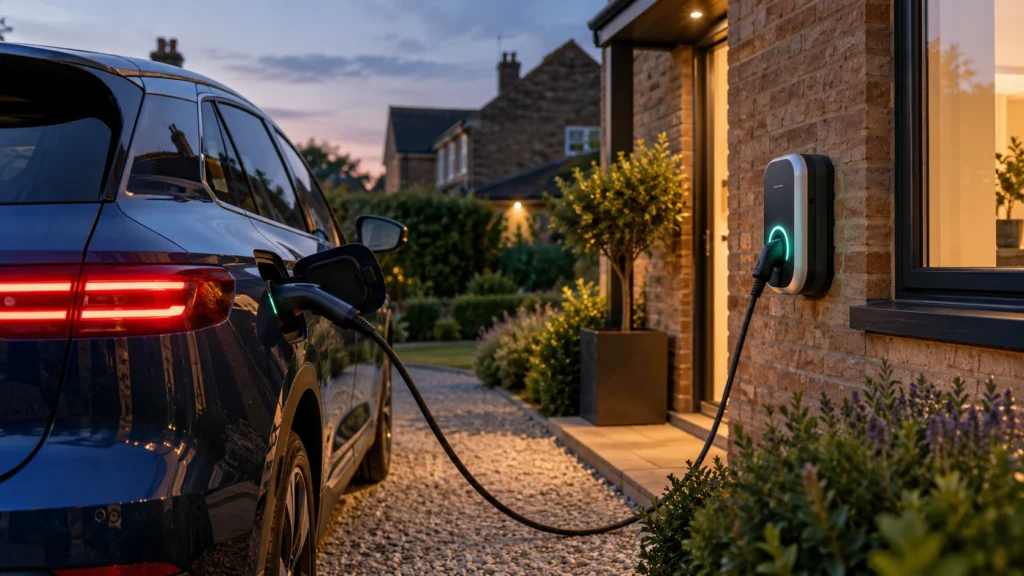
Your electricity meter can record more energy than your electric car adds to its battery. That difference does not automatically mean the charger or supplier has made a mistake. Charging uses electricity as well as storing it.
The difference matters because you pay for the energy you draw. Multiplying battery capacity by your tariff can therefore understate the cost of a recharge.
Where the electricity goes
Your home supplies alternating current, while the battery stores energy using direct current. The car’s onboard charger converts the electricity and loses some energy as heat. Cables and battery processes create further losses.
The car also keeps electronics running while charging. Battery heating or cooling can consume additional electricity when conditions require it. A longer session gives those supporting systems more time to use energy.
Cabin preheating from the charger also increases purchased electricity, although it provides useful warmth. Separate that consumption from conversion losses when investigating your own figures.
What testing has found
ADAC testing published in August 2026 measured five electric cars under controlled conditions. At 11kW wallboxes, losses ranged from 5.1% to 7%. Domestic-socket results ranged from 12.7% to 24.2%.
Reduced-power charging produced losses between 8% and 12.8% in that test. The researchers began with batteries between 20°C and 30°C and charged within the 10% to 90% range.
These German tests explain the effect of charging power, but they cannot guarantee results from a British installation. UK home chargers commonly use around 7kW. Your car, temperature and equipment may produce different figures.
A 10% allowance can help build an initial estimate. Treat it as an assumption until you have measurements for your own setup.
Calculate losses correctly
Suppose 10% of the electricity drawn fails to become stored battery energy. Charging efficiency is therefore 90%. To add 50kWh to the battery, divide 50 by 0.90.
The answer is 55.56kWh from the supply, including approximately 5.56kWh that does not remain in the battery. Simply adding 10% gives 55kWh, which slightly understates the requirement.
At an illustrative 25p per kWh, the recharge costs £13.89 rather than £12.50. The difference is £1.39. At 7.6p, the same loss costs approximately 42p.
The percentage matters, but the electricity price determines its financial impact. A cheaper tariff can outweigh a modest difference in charging efficiency.
Avoid counting the same loss twice
A dashboard reading of four miles per kWh may describe energy leaving the battery. With 90% charging efficiency, that translates into approximately 3.6 miles per kWh purchased. Check the vehicle’s definition before adjusting anything.
If you already divide miles travelled by metered charging electricity, your figure includes losses after that meter. Adding another blanket 10% would exaggerate consumption.
For a useful check, compare several weeks of charging records and mileage. Start and finish at roughly the same battery percentage. Account for public charging and any significant preheating. A single battery-percentage reading is too approximate for a precise loss measurement.
Reduce waste without increasing the bill
Use properly installed charging equipment and follow the car manufacturer’s charging guidance. Unnecessarily low charging power can increase the proportion used by background electronics. However, solar surplus or a cheaper tariff may still make slower charging economical.
Choose charging times by total cost rather than efficiency alone. Paying a higher daytime rate to avoid a small loss may cost more overall. Your best measure is the electricity bill for the miles you actually drive. Once you know your own electricity price, enter it in our EV fuel savings calculator to see what switching could save.