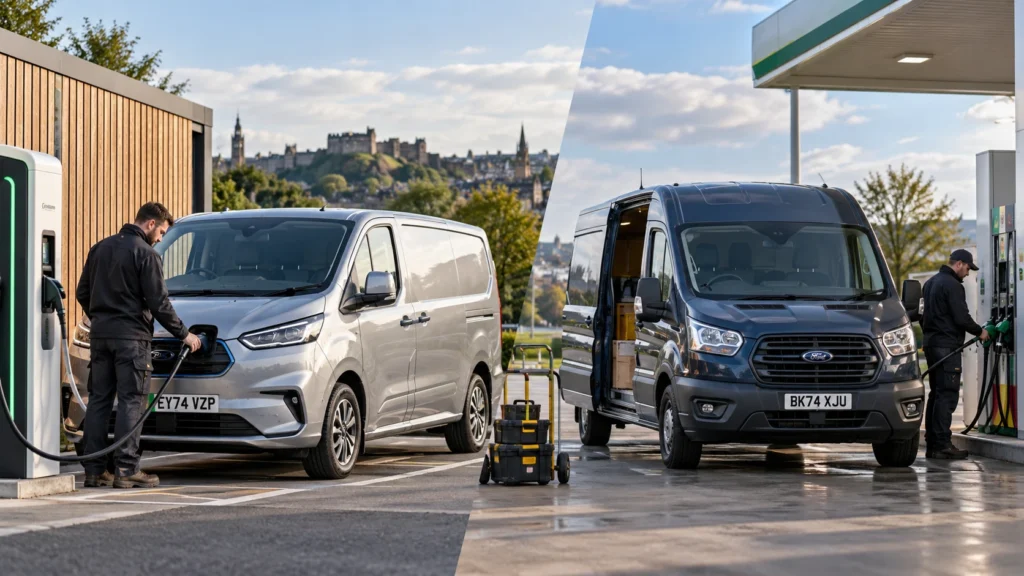
A van that returns home every evening offers a very different electric-vehicle proposition from one crossing the country daily. The first can recharge while its driver sleeps. The second may need expensive charging during working hours.
Electric vans can substantially cut energy bills, but the route must suit the vehicle. Payload, winter range and charging time matter just as much as the advertised monthly payment.
I got a call from my sister when her diesel Ford Transit Custom catastrophically broke down (her eventual bill was almost £7000!!!!). She wanted me to suggest a replacement. She didn’t have monthly payments at the time, and didn’t want to pay too much.
Vans cost an absolute fortune these days, and I couldn’t find anything like hers for less than £470 per month. But because I had recently gone electric, I thought I’d check that out for her. The Kia PV5 she now drives still ended up costing more than £400 per month on a lease. However, over £300 of that each month was offset by the savings she made from not having to pay for diesel anymore. And that was BEFORE the cost per litre shot up to over £2.
Compare the same working day
Start with the mileage your van actually covers and the load it carries. Include tools, fittings, goods and people when checking its weight limits. Check towing limits separately if you use a trailer.
Test the proposed electric van on your route with a representative load. A brochure range cannot tell you exactly what remains after a cold motorway journey.
Also establish where the van will park overnight. Cheap home electricity helps only when the driver can access a suitable charger and tariff. A business depot needs its own electricity quote and installation assessment.
A worked energy comparison
Assume a diesel van returns 35mpg and an electric van travels 2.25 miles per purchased kWh. The electric figure includes charging losses. These are example efficiencies, not claims about particular vans.
Using the UK average diesel price of 197.58p per litre on 28 September 2026 gives 25.66p per mile. Over 15,000 miles, diesel costs approximately £3,849.
At an illustrative home rate of 7.6p per kWh, the electric van costs 3.38p per mile. Its annual electricity bill becomes approximately £507, saving about £3,343 on energy.
At an assumed depot rate of 25p, electricity costs 11.11p per mile, or approximately £1,667 annually. At an assumed public rate of 77p, it costs 34.22p per mile, or £5,133 annually.
These examples use final prices payable before any VAT recovery. They exclude vehicle payments, installation, maintenance and tax. Check your own tariff eligibility and business costs rather than treating the examples as quotes.
Allow for the time spent charging
Suppose your working day covers 100 miles at the example electric efficiency. You must buy approximately 44.44kWh to replace that energy. At a constant 7kW supply, that takes at least 6.35 hours.
A six-hour cheap window would therefore fall slightly short. Slower charging or interruptions would increase the required time. Check that the overnight schedule works before calculating every unit at the cheapest rate.
On longer routes, include diversions, queues and charging time in the working day. Charging during an existing break may add little disruption. An extra unpaid hour can erase part of the energy saving.
Compare the whole vehicle bill
Obtain like-for-like lease or purchase quotes, including initial payments and mileage limits. Include charger installation, insurance and scheduled servicing. For purchases, estimate resale value over the same period.
Electric vans still need tyres, brakes and inspections. They also generally pay vehicle tax, so avoid calculations that assume a blanket exemption.
Use consistent VAT treatment across fuel, electricity and vehicle payments. A VAT-registered business should compare its actual costs after any permitted recovery. Mixing a VAT-exclusive lease quote with VAT-inclusive costs can distort the result.
Which businesses benefit most
Predictable routes and overnight charging give an electric van the best chance of reducing costs. In our example, electricity reaches diesel energy-cost parity at about 57.74p per kWh. Your own threshold changes with fuel economy and electricity consumption.
An electric van can save money even if its monthly payment exceeds the diesel alternative. It can also lose money if public charging and downtime consume the saving. Test the working day first, then compare the complete bill. Popular electric and diesel vans are included in our EV fuel savings calculator, so you can compare your own van and mileage.