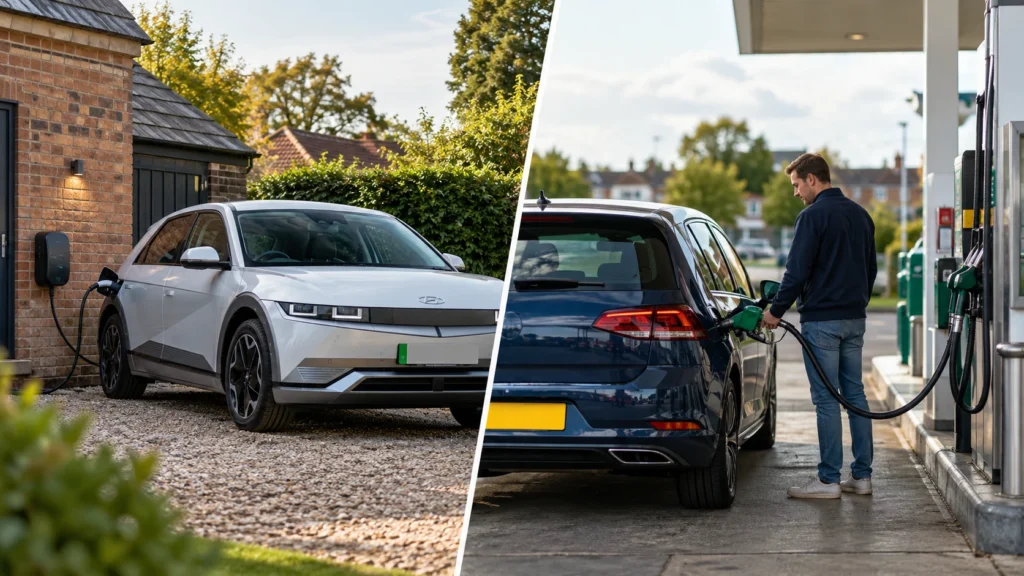
Electric cars can be much cheaper to fuel than petrol cars in 2026. That does not automatically make every EV the cheaper car to own. Charging access, insurance and the purchase deal can change the answer. I’ve been staggered at how cheap it is to run my EV. I always hated the idea of an EV. And the concept of owning a Chinese EV was something I would have expected to happen around the same time I grew another head!
For me, the change of heart started when I moved to a house with off-road parking. Add in the fact that the vast majority of my driving was around town, and an EV started to make a lot of sense. When the Changan Deepal S07 started appearing in all my low-cost searches for a new lease on Leasing.com, I finally had to take a closer look.
When I saw what you got for your money and how cheap it would be to run, it was a no-brainer. When I finally saw one in the flesh, the decision to go ahead was easy. The fact that it has a notable resemblance to a Lamborghini Urus didn’t hurt either.
I would start by considering the journeys you actually make and the electricity you can actually buy. A headline saving based on someone else’s tariff tells you very little about your own finances. I use the Intelligent Octopus Go fixed tariff, and it costs me less than 8p per kWh to charge my car.
Home charging gives the clearest energy saving
Consider a petrol car returning 45mpg and an EV covering 3.6 miles per purchased kWh. The EV figure includes charging losses. These efficiency figures are assumptions for comparison, rather than averages.
At the UK average petrol price of 173.46p on 28 September 2026, the petrol car costs 17.52p per mile. Electricity at 26.32p per kWh puts the EV at 7.31p. That electricity rate reflects the October to December Direct Debit price-cap average in Great Britain.
Over 10,000 miles, the energy saving is approximately £1,021. At an illustrative qualifying overnight rate of 7.6p, the saving rises to about £1,541. Actual tariffs and eligibility vary. These calculations hold prices constant for the comparison.
Public charging can reverse the result
At 77p per kWh, our EV costs 21.39p per mile. Over 10,000 miles, that means approximately £2,139 for electricity against £1,752 for petrol. The EV costs roughly £387 more for energy in this example.
The 77p rate matches the August 2026 weighted average for rapid and ultra-rapid public charging. Cheaper public options exist, and occasional rapid charging will not produce the same annual bill.
Estimate how much electricity you will buy at each price. Then use that mixture to calculate your annual charging cost.
Maintenance helps but does not disappear
An electric motor avoids engine-oil changes and several combustion-engine service items. That can reduce routine maintenance, although the manufacturer’s schedule still matters.
Tyres, suspension, cabin filters and brakes still need attention. Obtain service-plan prices for the actual cars rather than assuming a fixed percentage saving. Get insurance quotes before committing, because your own postcode and chosen model affect the result.
Electric cars also pay vehicle tax. For 2026/27, the standard annual rate is £200 for EVs first registered from April 2017. New EVs pay £10 in their first year. Older vehicles and expensive-car supplements require separate checks.
The purchase deal can outweigh the fuel saving
Suppose the EV costs £100 more each month under otherwise comparable lease terms. That adds £1,200 annually. Our standard-home-charging saving would not cover the difference before other costs.
Compare the initial rental, contract length, mileage allowance and any maintenance package. Dividing only the monthly payment by your expected mileage hides part of the bill.
For a purchase, allow for depreciation and finance interest over the same ownership period. Do not add full loan repayments to depreciation, because that counts the vehicle’s capital cost twice.
A charger installation also needs funding. Spread its cost across the period you expect to use it when comparing ownership costs.
When an EV makes financial sense
An EV deserves serious consideration if you can charge cheaply and the purchase or lease deal compares well. High mileage increases the value of each penny saved per mile. Low mileage gives a higher upfront cost fewer opportunities to pay for itself.
Keeping a serviceable petrol car can still cost less than replacing it purely to save fuel. Run both calculations before deciding. The answer should come from your complete budget, not an assumption that one fuel type always wins. To see the fuel side of that answer for your own cars, mileage and tariff, use our EV fuel savings calculator.