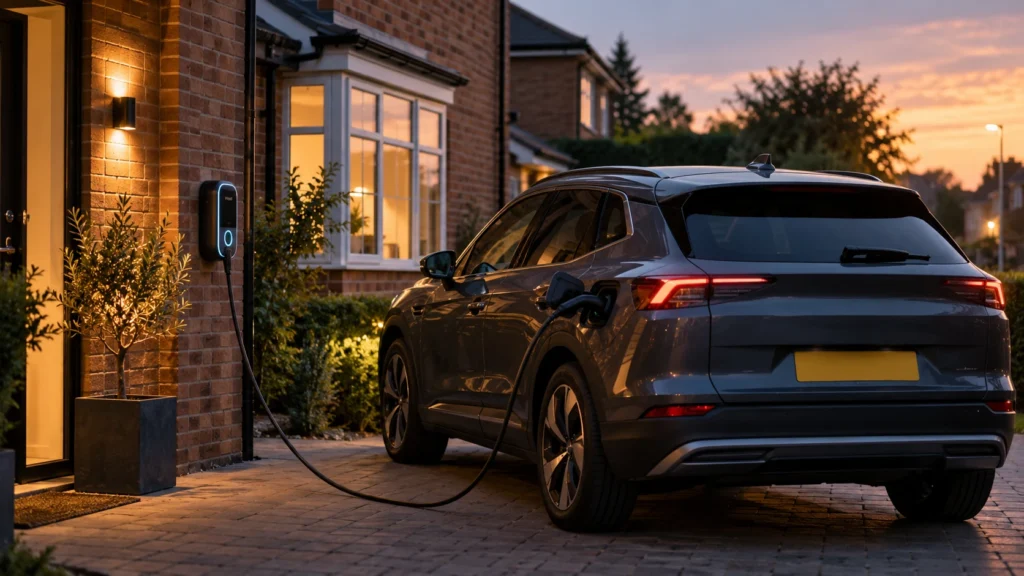
I have to admit it. I went into EV ownership a little blind. I had an idea it would be much cheaper than a combustion-engine alternative, but I didn’t know HOW much cheaper. Charging an electric car at home can cost surprisingly little, but the cheapest figures need some explanation. Your electricity tariff matters, as does the amount of energy your car actually takes from the supply. I am with Octopus, and their Intelligent Octopus Go plan is amazing for EV owners. My off-peak tariff is just £0.0762 for EV charging, which is sensational.
Unless I am driving the occasional long distance, my car costs less to run (electricity) than my mobile phone each month. And my mobile phone is a SIM-only deal with no hardware repayment charges as I buy my phones outright! It really is THAT cheap to run an EV when you charge at home overnight.
For a car with a 60kWh usable battery, a 20%-80% charge could cost £10.53 on standard electricity. The same charge could cost £3.04 at a qualifying overnight rate of 7.6p. Both examples allow for charging losses. Here is how to work out which figure belongs in your budget.
Start with the price on your bill
The October to December 2026 electricity price cap averages 26.32p per kWh for households paying by Direct Debit. That covers England, Scotland, and Wales, with regional differences. Northern Ireland has a separate energy market. Your fixed tariff or existing deal may charge a different amount.
A kilowatt-hour, or kWh, measures energy. Your supplier bills you for each unit your charger draws, including electricity that never reaches the battery. Multiply those units by your electricity price to calculate the charging cost.
What is a normal top-up cost
A 60kWh usable battery needs 36kWh to move from 20% to 80%. Assuming 90% charging efficiency, the supply must provide 40kWh. At 26.32p per kWh, that costs £10.53.
An empty-to-full charge needs approximately 66.67kWh from the supply under the same assumption. That costs £17.55. These calculations use usable battery capacity, rather than a larger total capacity that includes inaccessible reserves.
The 10% loss allowance is an example, not a promise about every vehicle. Temperature, charging equipment and the car itself affect the result.
How overnight charging changes the bill
On 3 October 2026, Intelligent Octopus Go advertised qualifying smart charging from 7.6p per kWh. At that rate, our 20% to 80% example costs £3.04. The theoretical empty-to-full charge costs £5.07 if every unit qualifies.
Check vehicle or charger compatibility, smart-meter requirements and your quoted tariff before switching. Also check the daytime rate, standing charge and any exit fee. A cheaper car-charging rate can still leave an expensive daytime household bill.
Do not assume one cheap window covers a full battery. A 7kW charger supplies at most 42kWh over six hours before losses. A large recharge may need several nights or some electricity at a higher rate.
Budget by mileage
Suppose your car travels 3.6 miles for every kWh you buy, including charging losses. Driving 1,000 miles needs about 278kWh. That costs roughly £73 at 26.32p, or £21 at 7.6p.
Use your charger records and actual mileage to replace that efficiency assumption. Cold weather, motorway driving and cabin heating can increase consumption. Your winter bill may therefore exceed your summer bill.
The other costs to include
A charger installation adds an upfront expense, so obtain a quote for your property. Include electrical work, the cable route and any necessary supply upgrades.
Your existing daily standing charge usually continues whether you own an EV or not. Count any increase caused by changing tariff when comparing your household costs.
The useful question is what charging adds to your bill each month. Match your mileage to your actual tariff, then check that the overnight window can supply the energy you need. To see what home charging could save you against your current car, try our EV fuel savings calculator.