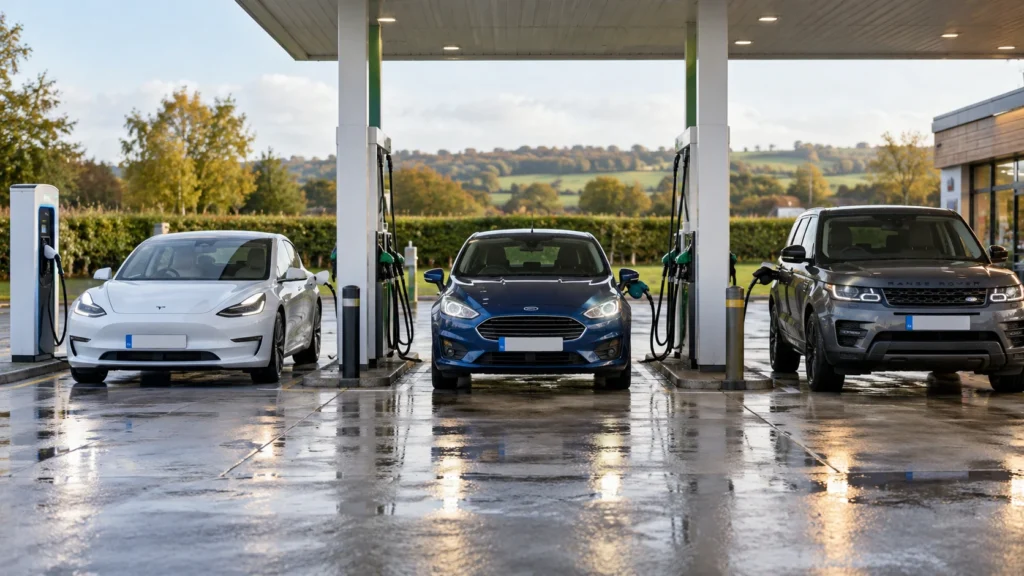
An electric car can cost about 2p per mile for energy, or more than 20p. Both figures can be correct. Where you charge makes an enormous difference, while petrol and diesel comparisons depend on actual fuel economy.
Cost per mile lets you compare those different fuels on equal terms. It also exposes the problem with comparing a cheap overnight tariff against an unusually thirsty petrol car. The EV savings calculator on this website is unashamedly based on home-charging. If you buy an EV and have to rely on public charging stations, it could cost you more to run an EV than a petrol or diesel alternative.
And if you are unfortunate enough to have to use an ultra-fast charger at a motorway service station, good luck to you and your wallet or purse!
Use figures that match your driving
For this comparison, assume 45mpg for petrol, 55mpg for diesel and 3.6 miles per purchased kWh for an EV. These are worked examples, not national efficiency averages or claims about particular models. The EV figure already includes charging losses.
The UK average pump prices for 28 September 2026 were 173.46p per litre for petrol and 197.58p for diesel. At those prices, our petrol car costs 17.52p per mile. The diesel costs 16.33p.
Both calculations use UK imperial gallons. Multiply the price per litre in pence by 4.54609, then divide by your MPG.
The electric car calculation
Divide the electricity price in pence per kWh by miles per purchased kWh. At an illustrative 7.6p tariff, our EV costs 2.11p per mile. At 26.32p, it costs 7.31p.
The 26.32p figure is the October to December 2026 average electricity cap rate for Direct Debit customers in Great Britain. The 7.6p example matches an advertised qualifying smart-charging rate checked on 3 October 2026. Check eligibility and your own quote.
At a public charging price of 54p per kWh, the same assumed efficiency gives 15p per mile. At 77p, it gives 21.39p. Those prices match August 2026 weighted averages for standard and rapid public charging respectively. Individual locations charge different amounts.
What that means over a year
Over 10,000 miles, the petrol example uses approximately £1,752 of fuel. The diesel uses £1,633. Our EV uses £211 of electricity at 7.6p, or £731 at 26.32p.
Exclusive charging at 77p increases the EV energy bill to £2,139. That exceeds both combustion-car examples. These annual projections hold prices and efficiency constant, so they are comparisons rather than forecasts.
They exclude insurance, tax, maintenance, charger installation and the cost of the vehicle itself.
Most drivers need a blended charging price
You do not have to charge exclusively at home or exclusively in public. Suppose you buy 80% of your charging electricity at 7.6p and 20% at 77p. Your average electricity price becomes 21.48p per kWh. At 3.6 miles per purchased kWh, that means 5.97p per mile.
Weight the calculation by electricity purchased, rather than simply counting charging sessions. A large motorway top-up matters more than a small overnight charge.
For our petrol example, electricity reaches energy-cost parity at approximately 63.09p per kWh. That threshold assumes the EV continues achieving 3.6 miles per purchased kWh.
Check the figures before changing cars
Use several weeks of fuel receipts or charging records to establish your starting point. A dashboard EV efficiency figure may exclude charging losses, so check what it measures.
Then compare cars of similar size doing similar journeys. Cheap electricity can create a substantial saving, but a higher monthly payment can consume it. Calculate the energy saving first, then put it beside the rest of the ownership costs. To compare real models instead of these examples, use our free EV fuel savings calculator.