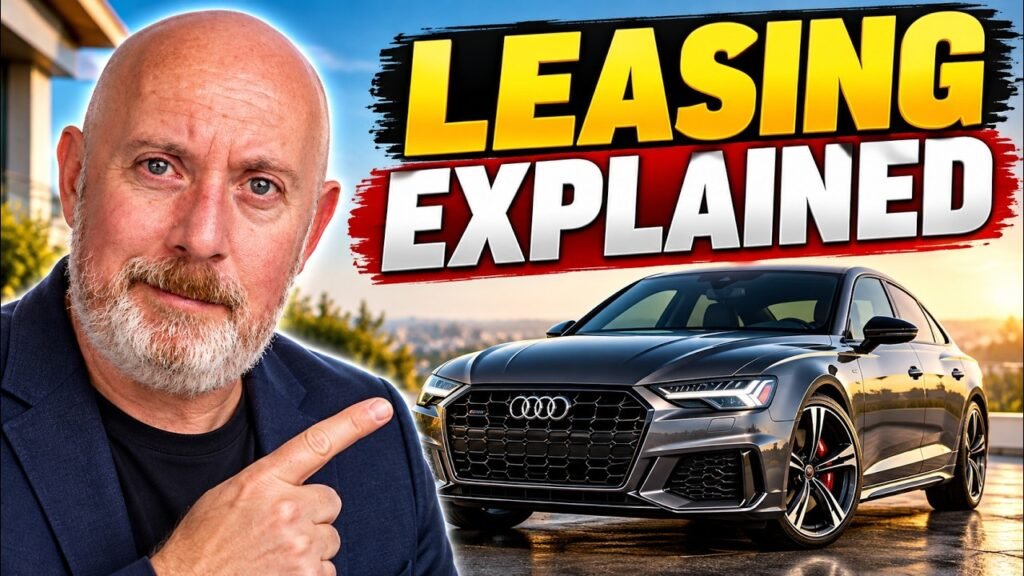
If you’re thinking about leasing a car, this guide covers what you need to know to decide whether it’s right for you, including the pros, the cons and what to look out for.
In terms of getting a new car, leasing couldn’t be more straightforward. It’s basically a long-term rental: you pay a fixed monthly payment for a set period and at the end you give the car back. There’s a bit more to it than that, but that’s the basics. I’ve worked in car dealerships and I’ve been leasing my own cars for years, so I’m a big advocate, but I’ll be straight about the drawbacks as well.
How a lease works
- A deposit. Most deals ask for an upfront payment, though you can find no-deposit deals. The deposit is always a multiple of the monthly payment, so if you choose £200 a month you may be asked for three, six, nine or 12 months’ worth. The more you put down, the lower the monthly payment. I always go for three.
- Monthly payments. These depend on the term and the annual mileage you choose. The lowest mileage is normally 5,000 miles a year, so on a three-year deal you’d be allowed 15,000 miles in total.
- What’s included. Road tax is included. Servicing and maintenance usually aren’t unless you add a maintenance agreement, which can be expensive. Insurance and fuel are down to you.
- The end of the lease. You hand the car back.
The advantages of leasing
- It’s usually the cheapest way to run a new car. Compare the same car on lease and on PCP and, 99 times out of 100 in my experience, the lease is cheaper. You get the lowest monthly payments of any finance deal, and a low deposit or even none.
- You always have a recent car, with the latest technology, safety features and more efficient engines.
- You’re covered by the manufacturer’s warranty. On a 24 or 36 month lease you’re under warranty throughout, so there’s no worry about a blown turbo and a big repair bill. Go to 48 months and with most manufacturers you’ll have a year without warranty and need an MOT, though Kia and Hyundai offer much longer warranties. I’m still not a fan of four-year deals.
- Fewer running costs. Over a short lease at modest mileage you probably won’t need a new exhaust, clutch, brakes or even tyres (unless you get a puncture).
- No depreciation to worry about. What the car’s worth at the end is the finance company’s problem, so you can order unusual colours without worrying about resale value. Mind you, some leasing companies that remarket their own cars may restrict your choices.
- Easy budgeting. It’s a fixed monthly payment, and you know what it will cost to get out.
- It isn’t a long commitment. Most leases are 24 to 36 months, not a five-year HP agreement you’ll end up carrying for ten years.
I’ll add one honest point: within two or three months of taking delivery of any new car, you’ll find yourself looking at what’s coming next. It’s like mobile phones in the Nokia days, when you couldn’t wait for your contract to run out.
The drawbacks
Mileage and condition
Set your mileage realistically. If you set it too low to bring the monthly payment down and then exceed it, you’ll be charged a set amount per mile, which will be in your agreement. When you hand the car back, it’s assessed against the company’s fair wear and tear policy. You can see this in advance, so there should be no surprises. Anything outside it is charged to you.
Be careful, though, and don’t assume every company plays fair. I had a bad experience with one leasing company over corroded alloys, which was a manufacturing fault that should have been covered by the manufacturer’s warranty. I appealed to the independent body and lost. Most companies are reasonable, but read the policy, and do your research on the company behind a deal before you sign.
Ending a lease early
Getting out of a lease early can be expensive. The rule of thumb is that you’ll be asked for 50% of the remaining payments. With ten payments of £300 left, that’s £1,500 to give the car back early.
It isn’t always fixed, though. A few years ago I had a Mercedes, the most expensive car I’ve leased, and I lost a lot of work not long after getting it. I went to the leasing company and explained, and they negotiated the figure down to quite a bit less than 50%. So the rule is 50%, but if you’re in real difficulty, talk to them.
Gap insurance
You’ll need fully comprehensive insurance. If the car is stolen or written off, your insurer pays out its valuation, which may not cover what’s outstanding on the lease. Gap insurance designed for leasing can cover the shortfall. It might cost a couple of hundred pounds up front, but you’d be glad of it in that situation.
Lack of flexibility
It’s a big ask to predict what you’ll be doing in two to four years’ time. If you might change jobs, move house, or otherwise alter your driving, think carefully. Changing the mileage mid-contract is unlikely, so either set your mileage with some headroom, or consider another form of funding.
Getting a good lease deal
Anyone can go online, change the parameters and say “that’s the price, do you want it?” Getting the best deal is a bit of an art.
- Headline offers are rarely what they seem. The price that grabs your attention is usually based on the longest term (probably 48 months), the lowest mileage (5,000 a year) and 12 months’ payments up front. You’re paying the same money overall, just earlier.
- Prices move fast. I took out my last lease at £350 a month. Two and a half months later, the same car on the same terms was £100 a month more. I once spotted a fantastic plug-in hybrid deal on a Hyundai Sonata, went to film a video about it and by the time I came back it was gone, and the same car was £250 a month more. Good leasing deals can disappear within days, sometimes hours, because of limited stock or end-of-quarter targets.
- Compare like for like. Check the term, annual mileage and deposit before you compare two deals.
Is leasing right for you?
I think it’s a great way to get a new car: simple, straightforward and usually the cheapest. Just choose your mileage carefully, check the handback conditions, and be realistic about whether your circumstances might change.
This guide is one of four. See also PCP, hire purchase and paying cash, or the overview of all four ways to pay.
If you’d like an expert to find and check a lease for you, I offer an independent car deal consultation service. I can identify the best deals, analyse one you’ve found and help you get the best price for your part exchange. Find out more.